
Overview
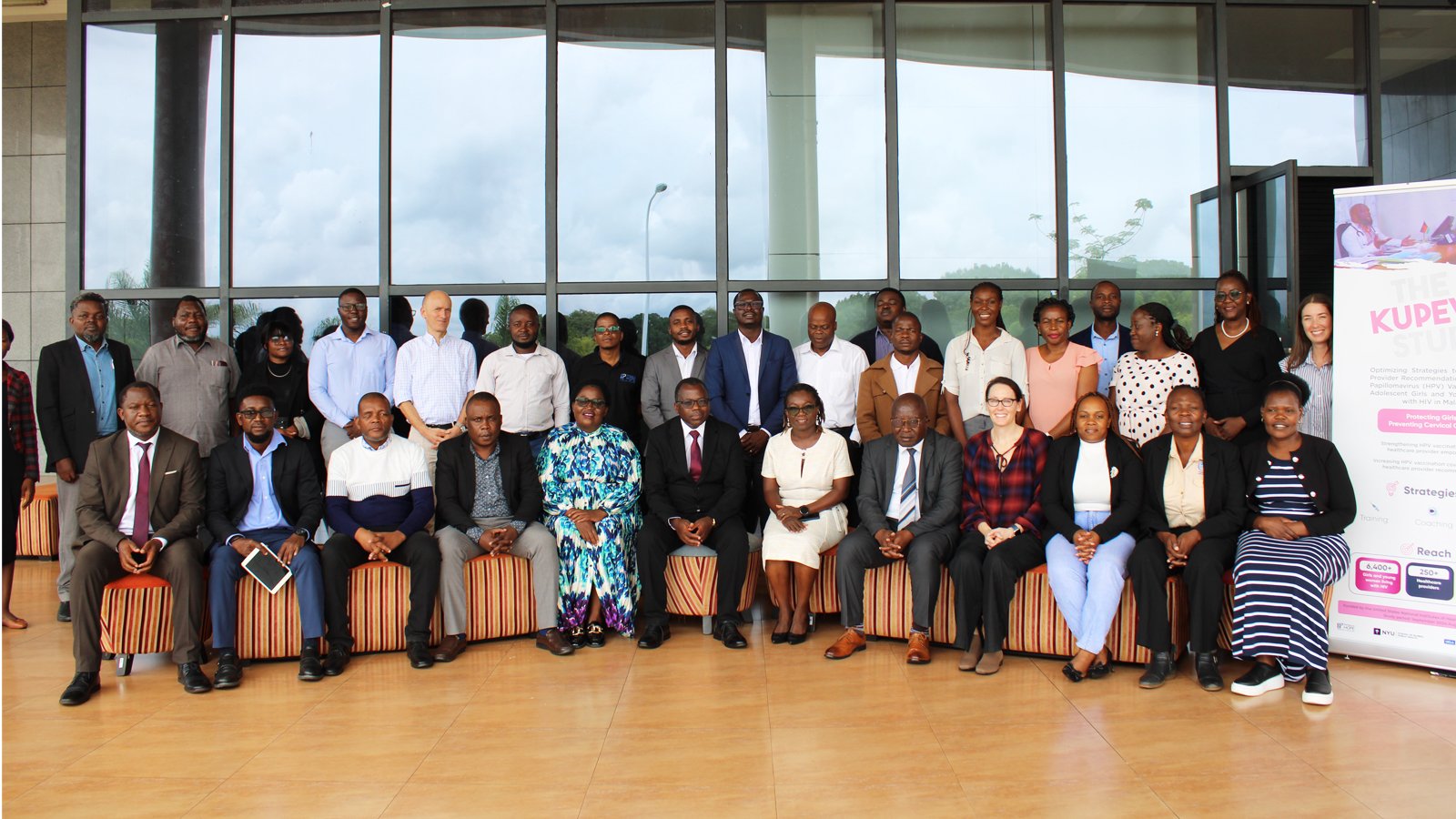
The Kupewa project, a
collaboration between Partners in Hope, NYU, UCLA, and the Ministry of Health,
aims to increase HPV vaccination coverage among adolescent girls and young
women living with HIV in Malawi. In a country with the world's second-highest
cervical cancer burden, the study identifies optimal strategies to promote
provider recommendation of HPV vaccination—a key driver of vaccine uptake. The
project tests different combinations of implementation strategies including
provider training, coaching, and reminder systems to determine the most
effective and sustainable approach to increasing vaccination rates.
Quick Facts
Participating Facilities & Districts and Reach :
The trial is in 9 PIH supported districts of Chitipa, Karonga, Nkhotakota, Kasungu, Dowa, Lilongwe, Mulanje, Chikwawa and Nsanje at 32 health facilities
Project Reach
Enrollment of 7,000 adolescence girls and young women living with HIV and 300 Clinical Officers, Nurses and Medical Assistants providing ART care.
Primary Outputs
HPV Vaccination recommendation rate at ART visits
"Protecting Girls, Preventing Cervical Cancer"
Why This Matters
Public health significance: Malawi has the second-highest cervical cancer burden globally (67.9 cases per 100,000 women), yet only 13% of eligible girls received HPV vaccine in 2022. Girls and young women living with HIV—who face elevated cervical cancer risk—have even lower vaccination rates (13% initiated, <6% fully vaccinated). Provider recommendation increases HPV vaccine uptake tenfold, making this study's focus on implementation strategies to boost provider recommendation critical for reducing cervical cancer mortality in a high-burden setting.
National health priorities: This study directly supports Malawi's national HPV vaccination program (launched 2019) and addresses the intersection of two national health priorities: reducing cervical cancer burden and improving HIV care outcomes. With 10.5% of Malawian women living with HIV and facing elevated cervical cancer risk, strengthening provider capacity to recommend HPV vaccination within existing ART services aligns with national goals for integrated, preventive care.
Potential impact on policy or practice: The study will identify the most cost-effective, feasible implementation strategies for increasing HPV vaccine uptake in resource-limited settings. Findings will provide evidence-based guidance for scaling up provider education and support systems nationally and across similar LMICs, directly informing policy on how to achieve higher HPV vaccination coverage and ultimately reduce cervical cancer deaths among high-risk populations.
Contact Information
Luke Chiwala – Project Coordinator
E-mail: lchiwala@pihmalawi.com
Contact the PI-Prof. Sam
Phiri (samphiri@pihmalawi.com) or
Luke to learn more or get involved.